Showing posts with label sabah Tourism. Show all posts

DirecxtRooms.com – Sabah celebrates the Christian calendar’s holiest day in April 2011

Thursday, 17 March 2011

The Christian celebration commemorates the day when the Romans crucified Jesus Christ and left him to die. According to the bible, Christians believe that Jesus Christ willingly died on the cross so that the world could be saved from sin. Good Friday is a state holiday in Sarawak  and Sabah where large communities of Christians live, however, in other parts of Malaysia, followers will take time away from their jobs to observe the day.

Malaysians in Sabah will gather together in churches for several services during the day, most notably a service at three o’clock, which is considered to be the hour when Christ died. The observation is the saddest day in the Christian calendar and the holiest day for Christians.


Church services usually consist of a re-enactment of the last hours of Jesus Christ’s life. The re-enactment, known as “The Way of Life”, has 14 milestones, beginning with Christ being condemned to his death and finishing with him being laid in a tomb. A purple cloth is draped over the crucifix to conceal it from the congregation and it is removed in the ritual of the “Veneration of the Cross”. Christians kiss the cross as a symbol of their penance.

Church services continue throughout the Easter weekend, culminating in the celebration of the rising of Christ on Easter Sunday.

Visitors staying in Kota Kinabalu Airport hotels (
http://directrooms.com/malaysia/hotels/kota-kinabalu-hot ...) during this time will be able to take part and observe the ceremonies.

Lek Boonlert, marketing head at DirectRooms.com commented: “The observance of Good Friday is of great importance to the Christian community in Sabah. Check availability online before you leave home.”

Queen E comes calling with 1,899 guests

Monday, 14 March 2011

Kota Kinabalu: The super luxury liner Queen Elizabeth making its maiden call at the wharf, here, at 7am Monday. Launched on Oct. 10, 2010, the 90,900-tonne state-of-the-art cruise ship brought along 1,899 guests comprising 800 Australians, 899 Britons and 300 Americans, after sailing from Perth, Sabah Tourism Board (STB) officials said.

A STB welcome squad garlanded the visitors, most of whom took day tours around Kota Kinabalu. The ship's actual guest capacity is 2,068 besides a crew capacity of 996. It measures 964.5ft by 106 ft, with a draft of 25.9ft.

In open sea, it has a top speed of 23.7 knots.

The Southhampton-based ship, owned by Cunard, left at 5.30pm for Hong Kong. Queen Elizabeth has been compared to the ill-fated Titanic because of its opulence. But the Titanic weighed only 46,328 gross tonnes and 882ft long.

Queen Elizabeth's Italian builders in Manfalco took less than two years to put it together at a cost of US$634 million. Cruise prices are "not low" by any means.

A short cruise can cost 10,317 British pounds (about RM50,700) while a long cruise can cost a staggering 119,311 pounds (about RM584,624), per person.

The Queen Elizabeth is Cunard's third new ship in six years, reportedly built in response to a boom in cruise holidays. In UK alone, Britons totalled 1.5 million in cruise bookings in 2010 while Queen Elizabeth's debut cruise to the Canary was sold out in 29 minutes.

Meanwhile, the QE's visit brings to mind the important role that an unknown Henry Walker played in KK's importance as a deep water port.

Walker, the North Borneo Commissioner of Lands, found after the turn of the 20th century that Gaya Bay had all the deep water for ocean going ships to site the North Borneo Railway terminus, after trial and error with Weston and Gantisan near Tuaran. All failed to meet expectations!

In fact, it was Walker's verdict in a decisive moment that founded Jesselton town - ancestor of modern KK.
The British North Borneo Chartered Company went first to Pulau Gaya to set up its trading post, complete with 25 shops and trade workshops, etc, but Mat Salleh attacked and razed it to the ground in 1897.
They abandoned Pulau Gaya but they didn't move straight opposite.

Instead, they picked Weston from where Scottish engineer, A.J. West actually built the terminus and completed a 20-mile railway track to Beaufort as part of a grand plan to pull a railway right across to Tawau via Tenom.

Only after that Weston terminus and the track to Beaufort did they realise the sea there was too shallow for ocean going ships and in a further search northwards, Chartered Company big guns raced up to Gantisan near Tuaran but again, massive mangrove swamps n the area proved unsuitable.

After so many false starts Walker finally paid attention to a 30-acre, one-and-a-half mile long strip of beach opposite Gaya Island (site of modern KK that is), which every body had ignored previously and found indeed, its water was deep and sheltered - perfectly suited for the twin purpose of a railway terminus and a wharf worthy of ocean going ships.

It was this final site decision from Walker that led to the extension of the North Borneo Railway track all the way from Beaufort to Jesselton !

So global shipping needs dictated the siting of modern KK and it looks like that reason remains valid till today.

Watching giant Queen Elizabeth sail smoothly into KK from the vantage point of Signal Hill in the golden hues of the early morning sun validates Briton Henry Walker's decisive contribution to the origins of Kota Kinabalu.

Sipadan Water Village - Dive Relax And Have a Good Time

If you are looking for a relaxing holiday spot and you enjoy beaches, diving and remote spots, look no more: the Sipadan Water Village will be able to provide all that and more. One of the most exclusive resorts in the Sipadan area, the village is meant to provide lodging and entertainment for divers coming to take advantage of one of the most extraordinary diving spots in the world, the Sipadan islands. The area presents one of the richest marine environments, with over 3000 fish species, hundreds of coral species residing in the nearby waters. Its welcoming waters also provide nesting and mating places for sea turtles, offering you the unique opportunity of seeing baby turtles hatching from their eggs.
Located on the island of Mabul, just a short 15 minutes away from the protected island of Sipadan, the Sipadan Water Village is placed on a reef, being built entirely on water. The units will provide you with all you need in terms of comfort, while the village's location will allow access to a diverse marine environment and diving spots near Mabul, Sipadan and Kapalai.
The resort will offer transportation to and from the nearby airports and ports of Tawau and Semporna, 3 daily boats to the nearby diving locations, daily buffet meals and snacks on top of the private cottages and sundecks. For adventurers, night diving is available. For a nice relaxing time after or instead of diving, the resort offers high quality spa services; wireless Internet is available for visitors who occasionally need to stay in touch with the outside world. The Sipadan Water Village also offers a helipad for emergencies.
The bar will allow you to relax with a nice tropical cocktail, while socializing with other visitors. The souvenir shop will provide you with all you need to remember the holiday for years afterward. If you do not want to waste a minute of available dive time, wake-up calls are provided by the staff. If you prefer a quiet evening in your cottage, mini-bars are available in each unit.
Getting to the Sipadan Water VillageThe most common approach is through Kota Kinabalu, in Borneo - the largest airport in the area. From there on you would need to fly to nearby Tawau - if flights are not available on the same day, the resort can take care of the bookings you need in Kota Kinabalu. From Tawau, transportation is offered to Semporna, the nearest town - after which a sixty minute speed boat drive will take you to Mabul and then to the resort. The resort can also take care of booking hotels in Tawau, if the flight arrives in too late.
The Sipadan Water Village employees will have the possibility to help you all the way to and from the resort, taking care of necessary transportation and bookings, making sure that your road is not more complicated than necessary. Once there, the village and its naturally beautiful environments will provide you with all the relaxation you need to get away from the everyday stress.
About Author
For more information on Sipadan Water Village visit divinginsipadan.com

Sabah in the island of Borneo

Friday, 11 March 2011

Taking the opportunity whilst visiting friends in Kuching, I decided to visit Sabah, the only other Malaysian state aside from Sarawak in the island of Borneo.
Not knowing much about Sabah, I decided to visit the tourist information office. There the friendly locals advice me of the top 10 things to do in Sabah. I didn’t manage to achieve all 10 in that list, but I managed some. I am quite satisfied and would surely come back to explore this part of the island of Borneo more in the future.
 
1) First on the agenda is the ‘Wild Man of Borneo” One would say I should be sick of seeing theses animals as I had seen them in Sarawak, the other Malaysian state in this magnificent island of Borneo. But funnily enough, I find I still want more. So off I went to visit the world’s oldest and largest OrangUtan Rehabilitation Centre, located at Sepilok. These are where the orphans or pet orang-utans are taught how to survive independently in their natural habitat. These orang-Utans are in danger of extinction due to the rapid loss of their natural habitat. Modern men are fighting with the Wild man for space. Sad….
 
2) Rest & relaxation is something all tourists look for as part of their holiday. When you are in Sabah, indulge in lots of rest and relaxation in the Tunku Abdul Rahman National Park, only 10 mins by boat from the capital Kota Kinabalu. This park is made up of 5 beautiful tropical sandy beaches namely Gaya, Mamutik, Manukan, Sapi and Sulug.

3) I am one of the ‘lazy’ tourists so I didn’t hike up the Kinabalu Park, a World First Heritage site, boasting the magnificent Mount Kinabalu. My brother who is more adventurous than me went up to the submit (4101meters). He reckons that is the highlight of his Sabah trip. This hike is not for tourists like me as it takes a minimum 2 days but along the way, you will be rewarded with exciting wildlife encounter.

4) While my brother was up the mountain, I was soaking it up in the Poring Hot Spring. Indeed a rejuvenating, natural and therapeutic hot spring. Here the sulphuric hot waters of the spring fed into the open-air Japanese style baths. I don’t have to go to Japan for this!
5) That night went to the Selingan Turtle Island and watched the giant turtles lay eggs on the beach. The eggs are then transferred to the hatchery by humans (a little helping hand from humans). There I witnessed the release of the baby’s turtles into the sea, apparently 365 days a year. Wonderful experience.
6) Rafting, now that is my cup of tea! I saw the local life from a rubber deck of a rapid raft. Sounds strange but this are truly wonderful. We head south to this small town of Kiulu and ride down one of Borneo’s scenic rivers over gentle rapids (just right for me), pass lush green jungle forest (neck cramp from looking for wild life), pass the local towns (dusuns), orchards and villages.
 
7) I am not a diver but I was told that if you are, don’t miss the Sipadan diving site, considered to be the world number one site. Fancy that! Sipadan offers deep and shallow diving, wreck and reef diving and snorkelling.
8)
Nightlife in Sabah is fantastic, eating out at local food stalls at the waterfront with life music. Such is life…

9) The town of Sandakan or capital of Sabah is similar to most towns in Malaysia. I am not much of a shopper or temple fanatic but it is still a wonderful experience.
 
10) Sabah Museum is not as good as the Kuching Museum in the sister state of Sarawak (in my humble opinion) but within the 17.5 hectares of lush green natural and planted jungle (botanic and zoological gardens), lies the Sabah museum (full of Sabah rich cultural heritage).
If I were to visit Sabah again, I would still visit my favourites (listed above 1-6)

Sipadan Island - Dream Destination For Scuba Divers

Thursday, 10 March 2011

If you're a passionate scuba diver, can you refrain yourself to experience the underwater mystery at Sipadan Island, where you have an opportunity to explore more than 3000 exceptional species like hawks-bill turtles, green turtles, green eels, mantis shrimps, hammerhead sharks, black tip sharks, white tipped sharks, barracudas, fire gobies etc. Crowded turtles can be easily seen on each dive. In coral garden, you can find different kinds of coral ranging from hard to soft and also in various shades of colors.
Sipadan Island is situated in the Celebes Sea, East Malaysia. Unfortunately, Sipadan marine park authority has restricted the max. no. of divers per day to 120. Moreover from the year of 2002, none of the overnight facilities are allowed here to protect the environment & marine life, which indirectly moved all the resorts to nearby islands Mabul and Kapalai and diving at Sipadan is operated from there.
Mabul is a land to many resorts. All most all the resorts offer various dive packages importantly barracuda point, drop off, coral garden, hanging garden, turtle cavern,etc. In turtle cavern, you'll be thrilled with swimming through the underwater limestone cave and in barracuda point you can see the schooling of barracuda and its tornado formation.
Some resorts diving package includes dive at kapalai also, which is just 15 mins journey from Sipadan. Experience at kapalai will be somehow different from Sipadan Island, macro features like giant frogfish, crocodile fish,etc., can be sited there.
Many resorts have in-house dining and bar facilities. Non divers accompanying with you can simply rest themselves in this beautiful resorts and can view this beautiful islands which is priceless.
If you are fascinated to have hassle free trip to this magnificent Island, it is better to plan your trip directly with the resort who provides tour packages & dive packages.
You will be tempted to make a trip again without hesitatingly.

Sabah : Beautiful by Nature

Its jungles are home to the orangutan, a huge tourist draw - and there's plenty more where that came from. Joanna Booth reports
Orangutan mother in Borneo
It wouldn’t make a great ‘lonely hearts’ advert: ‘Ginger. Hairy, bulky body. Long arms, short legs. No tail. Seeking fun with fruit. GSOH.”
However unattractive they sound on paper, in person, orangutans are irresistible. Every year thousands of tourists feel the draw of these great apes and head to Borneo, the large island in the South China Sea that is one of the only places they can be found.
Orangutans may be the headline act, but Borneo has plenty more wildlife to offer including pygmy elephants, macaques, monitor lizards, huge-beaked hornbills, and comically droopy-nosed proboscis monkeys. Turtles nest year-round and the rich reefs produce beautiful corals and teem with brightly coloured fish.
There’s culture too; from the thriving city of Kuching, full of mosques, temples and colonial buildings, to the remote villages of the Iban jungle tribes, where visitors can stay in traditional long-houses.
Though Borneo is just one island, there are three countries in it. The lion’s share of the north belongs to Malaysia. The states of Sabah and Sarawak are the most developed for tourism and the most visited from the UK. Also in the north lies the tiny, oil-rich state of Brunei, easily visited from Malaysian Borneo.
The great southern mass of the country belongs to Indonesia. Remote, and divided from the north by huge mountain ranges, it’s less visited by UK travellers. A lack of road and air links make it time-consuming and inconvenient to travel between Malaysian and Indonesian Borneo, so recommend clients don’t try.

Sabah

For short trips, Sabah has much of what travellers look for from a Borneo adventure. The capital city, Kota Kinabalu, is accessible by air from Kuala Lumpur, and is one of the major tourist gateways into Borneo. Sabah’s most popular upmarket beach hotels, the Nexus Resort Karambunai and two Shangri-La resorts, the Tanjung Aru (see below) and the Rasa Ria, aren’t far from Kota Kinabalu.
The Sepilok Orangutan Sanctuary near Sandakan is a must-see as visitors can get relatively close to orphaned and rescued orangutans. Feeding times are 10am and 2.30pm.
Many visitors take river cruises down the Kinabatangan River between Sandakan and Sukau, where they’ve a good chance of spotting proboscis monkeys, pygmy elephants, macaques and hornbills.
Giant lilies in Sabah, Borneo
To be in with a good chance of seeing the apes in the wild, clients should visit the Danum Valley. The huge basin is a conservation area, and there’s a 40-metre-high canopy walkway through the trees, giving a bird’s-eye view of the wildlife, which also includes gibbons and even the rare clouded leopard. Tours are organised by the only resort, the Borneo Rainforest Lodge, which has comfortable chalets overlooking a river valley.
The Kinabalu National Park is 56 miles outside of the city, and is home to Mount Kinabalu. At 4,095 metres it is southeast Asia’s highest peak. The climb, which takes two days, isn’t for the faint-hearted.
Off Sabah’s coast are beautiful islands. Turtle Island, as Selingan is often known, is the hub of the ecotourism industry. Visitors go to the island in the afternoon, enjoy the beaches and then stay in basic accommodation overnight. Once night falls, tourists will be allowed to watch a hawksbill or green turtle laying its eggs.
Sipadan Island, a slim limestone pillar reaching 700 metres from the sea floor, is a diver’s paradise. Clients might see tens or even hundreds of turtles, barracuda, reef sharks and bumphead parrotfish.

Sabana calling on ex-State players

Sabah Net Ball Association (Sabana) is calling on the public, especially former State players, to support their Sabana Fund Raising and Charity Dinner 2011, which would be held at the Shangri-La's Tanjung Aru Resort and Spa here, this Sunday. Organising chairman, Bibi Zairah, said ticket sales for the dinner has exceeded fifty percent but that more need to be sold in order for the programme to truly achieve its objective.

"We are still waiting for more people to come forward to support our programme, especially those who previously played the sport for the State.
"All ex-State players are being counted on for support and we hope more of them would come forward to buy some tickets," she said when met in the State capital here, yesterday. Among those who have extended their support include the Association's founder, Datuk Christine Van Houten.Christine, who is also President of the Society of Sabah Heart Foundation (Sos) is supports the event, which is scheduled to start at 7pm.
According to Bibi, part of the proceeds from ticket sales would be donated to charity, while the remainder would be used to implement the Association's programmes for the year.
The event will provide evening entertainment performed by local artistes such as the ever-popular Abu Bakar Ela, Adam and Esther Clement.

The organisers are selling tickets for seats of 10, which are priced at RM1,000, RM2,000, RM3,000 and RM5,000, while individual seats can also be purchased for RM100, RM200, RM300 and RM500 each.
For more information please contact Bibi (016-5824040) or Hazlyn Liaw (010-9313453).


Borneo Destination

Wednesday, 9 March 2011

Have you ever come to Borneo, the third largest island in the world with a tropical paradise housing the oldest and most bio-diverse rainforest on earth, endless pristine white beaches and an abundance of national wonders? Divided between Indonesia, Brunei and Malaysia, Borneo is the largest territory being appropriated to Malaysia. Separated from mainland Malaysia on the west by the South China Sea, the two states of Sarawak and Sabah make up Malaysia's part of Borneo.

As large as it is, Borneo is still a microcosm of spectacular flora and fauna, housing the Rafflesia, the world's largest flowering plant, and the scary, insect-digesting Pitcher plant. As well, Borneo is home to unique animals, among them the shy Orangutans, the rare and unusual Proboscis Monkey and the ludicrous Bearded Pig.

An abundance of national parks, virgin jungles and rainforests, meandering rivers and cascades, extensive cave systems and sandy white beaches offer adventures of every kind for every level. A morning stroll in Mulu National Park or a week's trek in pristine jungle; a river safari or white water rafting on the Rejang, Malaysia's longest river; caving and exploring the world's most extensive cave systems or snorkeling and scuba diving off the unspoiled reefs of the South China Sea - all are here for the taking.
In concert, Borneo's cultural diversity, including 27 distinct ethnic groups speaking 45 languages and dialects provides a unique local experience. Indigenous culture remains ingrained in the lifestyle of its inhabitants, who adhere to a variety of native traditions, practices and religions.
Beyond the towns and cities, life here still revolves around the longhouses, kampungs and the rivers. Malays and Chinese established themselves alongside native groups with such evocative names as Iban, Melanau, Penan, Kelabit ad Bidayuh, grouped together under the general term Dayak, to form a richly varied population, each with their own culture and traditions. To this day, the largest group, the Iban, reputed to be Borneo's most formidable headhunters of past, dwell in communal fashion in longhouses, stilted structures with many rooms that house an entire community of families. Beside them, the Melanau, traditionally fishermen and seafaring people, live in Kampungs (Malaysian villages) - a cluster of wooden homes on high stilts near Borneo's rivers.Be it eco adventure outdoors, a cultural experience or both, Sarawak and Sabah, Malaysia's Borneo Island states boast the most diverse, exciting and the very best of family adventure travel on earth.

Sabah - Sungai Morali, Luanti Natural Fish Spa

Tuesday, 8 March 2011

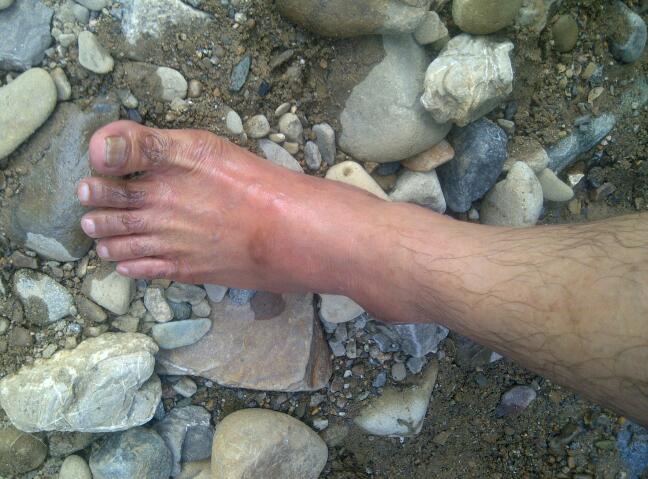
Fish Spa had made its appearance in shopping complexes where one can go and let the fish nibble on the skin, peeling away dead skin cells while experiencing the massage sensation. Dip your feet into the fish tank and the little fish come and treat them.

Having fish spa in its natural environment and habitat is quite rare. The community of Kg Luanti located about 18 kilometres from Ranau town seems to be blessed with this natural spa, where the river, Sg Morali was turned into a tourist attraction. I had an opportunity to visit one while I took my family back to Sabah for a family gathering.

To go to Kg Luanti, the best way is to drive up the winding road from Kota Kinabalu towards National Park or Sandakan and on the way after Ranau town is this Tagal Sungai Morali, Kg. Luanti Baru. This remote village has been selected as the Malaysia River Care winner Award in 2006 for their effort in maintaining the natural gift.  
      
The landmark is the Sabah Tea signboard and immediately after it is the Tagal Sungai Morali at Kampung Luanti  Baru. You go past the junction to Poring hot Springs. This signboard below is very visible as you go past the Sabah Tea signboard.

The fish found in the area are the Garap, Pelian, Kelah and Tor Tambroides. They will “attack” you once you step into the slow flowing water and start nibbling on your skin. Adult visitors only pay RM 5.00 while children between 6 – 12 years RM 2.00. Infant is FOC. That is for dipping the feet into the water for 15 minutes but if you want to “swim with the fish”, there is a flat rate of RM 10.00 per  15 minutes, irrespective of age.
Top: Step into the water and the fish will swarm around your feet

Top photo: This is what happen to my feet after being “massaged” by the fish. Less dead skin, uh?

The place starts operating in 2002 but only open to the public in 2008. Besides the fish spa, the place provide chalet at between RM 50.00- RM 80.00 per night with access to the kitchen and guest can cook on their own. However guest can request catering for food if they have no time to cook. There are homestay too if the chalet are full. For the more adventuruous, there are campsites to fix up your tent.

At any one time the Tagal Sg Morali can accommodate up to 200 guest, and team building or motivational activities can be organised here.
Top : Some of the chalet within the area

While enjoying watching visitors giggle and getting excited having their feet being “massaged” by the fishes, guest can sing out your voice at the karaoke for RM 1.00 per song.  

So, if you visit Sabah and have enough time to travel around, try not to miss this fish spa.   

Visit  www.asehtours.com for details

Borneo Escapade

Monday, 7 March 2011

East Malaysia has always fascinated me. Despite being a part of Malaysia, there has been something enchanting, almost foreign about it that has always stroked my fancy. And while I'm a regular visitor to Sarawak, it is Sabah that I had yet to experience. Thanks to Firefly, I managed to do exactly that. The subsidiary of Malaysia Airlines had their inaugural flight to Kota Kinabalu recently, and I was one of the lucky few to board their brand new Boeing 737-800 aircraft.

Everyone is used to seeing Firefly's ATR 72-500 turboprops, so having their corporate bright orange-and-white colors on a larger jet is rather refreshing. The bigger planes also mean longer hauls and better comfort, which makes perfect sense when it comes to their flights to East Malaysia.

Upon touchdown at Kota Kinabalu International Airport (KKIA), we were greeted with a traditional aviation industry welcome, which was a water spraying guard-of-honour. After the welcoming ceremony and press conference, we were taken to Kota Kinabalu's Grand Borneo Hotel, which is part of the 1Borneo Shopping Paradise mall. A simple cocktail party with light food, music and dance followed. And luckily for me, I had a friend who's local; she took me sightseeing around town and beaches at night. Kota Kinabalu is really a town which has to be travelled by car, and it is gorgeous at night.

The next day, we were taken for a preview of Saracen Reef World, which was a reef activity pontoon out at sea. From Sutera Harbour, we took a breezy two-hour-and-twenty minute catamaran ride through Tunku Abdul Rahman Marine Park, where we saw numerous beautiful islands along the way. We were told that the pontoon would be towed more than 40km from its current location to a reef area and be similar to the one at the Great Barrier Reef in Australia. Despite it being a preview, we did manage to see a couple of fish underwater and also to get an overall feel of how the pontoon would be like when it is expected to open in May. We later took a much smaller boat back to shore where we joked how we sat like refugees on the floor.

That night, dinner was at Kampung Nelayan, a floating seafood market restaurant. The seafood there was served fresh and the dishes served included fish maw soup, pucuk paku (wild fern shoot), succulent prawns, steamed grouper, crispy chicken and soft-shelled crab. I also experienced tasting a type of snail/shellfish called Siput Tarik, aptly named because we used a toothpick to pull it out from its shell. It was rather daunting at first, but I found it tasted somewhat similar to squid. Not too bad I must say.

We were also treated to a traditional Sabahan cultural performance, where dances like the Daling-daling, Sumazau and Magunatip were presented. The Magunatip or bamboo dance was particularly interesting, as it required precision and skill so that the dancers avoided getting their feet trapped in the bamboo as they danced. Guests were also invited to have a try, with many hilariously getting their legs snapped. We were also given a chance to try the famed sumpit (blow-pipe). Later, my Sabahan friend once again took me around town, bringing me to a lovely Irish Bar that was located just beside the sea.

On day three we took a two-hour drive to Kuala Penyu jetty, after which we set off to Pulau Tiga via a fun and bumpy 45-minute ride on speedboat. Pulau Tiga is also popularly known as "Survivor Island" thanks to its role as the site for the first season of reality show, Survivor.

Upon arrival I was drawn by the breathtaking view of a true island paradise; white sandy beaches and greenish waters. Our rooms were little chalets on stilts, surrounded by jungle terrain and wildlife. I wasn't kidding about the wildlife; we found out there was a family of over 20 giant monitor lizards behind our chalets. These lizards will chase you if they detect sudden movement, as demonstrated by one of the resort staff. Monkeys were also common residents, as seen from all the 'do not feed the monkeys' signs around the resort.

MOUNT KINABALU

PACKAGE       : Mount Kinabalu - Native Sabahan
DURATION    : 2 Days & 1 Night

Day 01  
Depart from Kota Kinabalu at 0700 Hrs and arrive at Kinabalu Park by 0830 Hrs - meet up with our representative. Then proceed to the Sabah Park’s HQ to register (please bring along your original IDENTITY CARD for verification); meet the assigned Mountain Guide(s) and transfer to Timpohon Gate. Packed lunch is given as you begin the ascent with the Mountain Guide(s) by 0930 Hrs. Expected to reach Laban Rata after 1600 Hrs and then check into Gunting Lagadan (a non-heated hostel with bunk-beds). There is a small and basic kitchen facility for you to make hot drinks. You are free at leisure for the rest of the day. After dinner at Laban Rata’s restaurant, return to Gunting Lagadan for an early night. Temperature is around 5C; it may even be rainy and windy.

Day 02
 
Wake up call at 0100 Hrs; have supper at Laban Rata’s restaurant and gear up for the climb to Low’s Peak to catch the beautiful sunrise. Begin to descend the latest by 0630 Hrs and arrive at Gunting Lagadan around 0900 Hrs. Proceed to Laban Rata for breakfast and by 1000 Hrs begin to descend to Timpohon Gate (ETA 1530 Hrs). Then transfer to the park’s HQ to collect your certificate and proceed to Balsam Restaurant for a late lunch. Transfer back to Kota Kinabalu. END OF SERVICE.
 
BACK TO: MOUNT KINABALU INFO

3 Day Selingan Turtle Island, Kinabatangan River, Sepilok Tour

Friday, 4 March 2011

A good chance to see numerous species of birds and other wildlife until nightfall.

Travel departing from:-

Perth from $1809*

Melbourne from $1959*

Adelaide from $1969*          

Sydney from $1976*

Brisbane from $1979*

 Day 1 Kota Kinabalu / Libaran Island / Selingan Turtle Island

Pick up from your Kota Kinabalu hotel and transfer to the airport for your flight to Sandakan. You will then be met on arrival in Sandakan and transfer to the jetty to board boat for Libaran Island. Check into your accommodation. Explore the nearby village and observe life in a fishermen's village. In the late afternoon, take a boat ride to Selingan Turtle Island. Watch turtle laying eggs on the beach, transfer of the eggs to the hatchery and release of hatchlings to the sea. Return to Libaran Island for overnight

Day 2 Libaran Island / Kinabatangan River.

After breakfast, return to mainland and proceed by land to Gomantong Caves. Explore the biggest bird's nest caves in Sabah where the bizarre edible bird's nest is harvested as they have been for hundreds of years. The caves are also home to more than a million bats.The birdlife around the cave is particularly rich, with crested serpent eagles, kingfishers, Asian fairy bluebirds and leaf birds often sighted. Continue the journey to Sukau by the Kinabatangan River. Check in to Sukau River Lodge. Boat trip to watch the curious proboscis monkeys gather by the river bank. A good chance to see numerous species of birds and other wildlife until nightfall.

Dinner. Slide show. If weather permits, night walk to search for stick insects, frog and beetles. Stay overnight at the Sukau River Lodge.

Day 3 Sepilok Orang Utan Centre / Sandakan

After breakfast, return to mainland and proceed to Sepilok Orang Utan Centre. Witness the feeding of orphaned orang utans. Walk along a jungle trail and observe the tropical lowland rainforest. Numerous wildlife may be seen. Transferto the airport for your flight back to Kota Kinabalu. Transfer back to Kota Kinabalu Hotel. Tour ends in KotaKinabalu at approximately 3.00 pm.

Inclusions

    • Return economy class airfare to Kota Kinabalu including prepaid airfare taxes.
    • 1 nights pre accommodation at the Langkah Syabas Beach Resort in a Run of House Room with breakfast.
    • 3 day / 2 night Selingan Turlet Island.
    • Kinabatangan River and Sepilok Orang Utan Centre Tour including return flights to Sandikan.
    • Transportation in air conditioned vehicle.
    • English speaking guide.
    • 1 nights post accommodation at the Langkah Syabas Beach Resort in a Run of House Room with breakfast.
    • Return seat in coach airport transfers in Kota Kinabalu.
Travel Dates
  • Valid for travel 1 May - 11 November 2011.
  • For more information call 1300 411 560

Sabah Travel Packages and Scuba Diving in Kota Kinabalu

Thursday, 3 March 2011

Scuba Diving in Kota Kinabalu: Discovering Malaysia's Amazing Marine Life
Scuba diving in Kota Kinabalu is definitely at the top of every diver's to do list. Divers from all over the world would agree that Kota Kinabalu holds one of the most beautiful coral reefs known to man. Scuba diving is almost a way of life in this place as most tourists flock here to experience its amazing marine life.

Kota Kinabalu is the capital state of Sabah, Malaysia. Located in the south-eastern region of Asia, the South China Sea borders it to the west while the Celebes Sea borders it to the south. Sabah is also home to the Coral Triangle, which is the melting pot of marine life. The Coral Triangle is known to have the largest and most diverse marine life in this part of the world, making it one of the most visited places in Malaysia.

Kota Kinabalu's Marine Park

Kota Kinabalu has one of the best dive sites for nature lovers or people who just want to enjoy the wonders of the seas. The Tunku Abdul Rahman Marine Park is located just twenty minutes by boat.Opened to the public in 1974, this marine park was named after the first Prime Minister of Malaysia. At the time, the park was Sabah's second National Park. The Tunku Abdul Rahman Marine Park is home to five rich islands surrounded by diverse marine life: the Pulau Mamutik, Pulau Manukan, Pulau Gaya, Pulau Sulug and Pulau Sapi. Of the five islands, Sapi, Manukan and Mamutik are the most visited islands as they are fully equipped with facilities and amenities for tourists and divers. For those who want to dive Kota Kinabalu, the park offers several dive sites they can choose from.

Kota Kinabalu is replete with dive sites and Sapi, one of its famous diving spots, is home to various sea creatures that can truly make your diving experience a remarkable one. The Sapi House reef is home to diverse marine life, including Barracuda, Damsel Fish, Bat Fish, Fusiliers, Wrasse, Puffer Fish, Parrot Fish, and Porcupine Fish. Divers can also catch a glimpse of Hawksbill Turtles that are abundant in this dive site. At the southern side of Sapi are other wonderful dive sites: the Rays Reef and Rons Reef. These two reefs have gentle slopes that start from 8m and go as deep as 18m.

Kota Kinabalu has something to offer as well to divers who are looking for some tranquillity, and Mamutik is the perfect location for them. More remote and quieter than Sapi, Mamutik is ideal for those who would like to dive in smaller groups. It has a fringing reef up north and on the western side where divers can enjoy watching False Clarke Anemone Fish that thrive in this location.

Scuba diving in Kota Kinabaluis a thriving industry due to the numerous dive sites and colourful reefs this side of Malaysia has to offer. With the best dive sites in the world, diving in Kota Kinabalu is definitely one activity that tourists should not miss in the country.

Shopping in Kota Kinabalu - For Everything Chic, Essential and Original

Wednesday, 2 March 2011

The Kota kinabalu Shopping

The city of Kota Kinabalu commands a remarkable view of the South China Sea and is the capital of Malaysia's state of Sabha. It offers some of Malaysia's best in shopping, dining, accommodation, nightlife and amusement. May it be books, branded wear, clothes, footwear, jewellery, arts and crafts or the latest technological devices, Kota Kinabalu is one city that will satisfy all your shopping desires.
Probably the most difficult decision you will have to make once you get to Kota Kinabalu is where you should start. There are plenty of malls, shopping complexes, bazaars and book stores. One can begin the dazzling strut through the maze of shops at the 'Wisma Merdeka', one of the oldest but chic shopping centres in Kota Kinabalu. Their merchandise ranges from beauty products to batiks, antiques, apparels, baby products, sports goods,mobile phones and food items. They even have a massage and reflexology parlour, where you can unwind while shopping.
A special feature of Malaysian shopping is the street fairs. If you happen to be in Kota Kinabalu on a Sunday, you should not miss the 'Gaya Street' fair, which has been operational for well over 50 years. Most of the vendors sell their own produce and have been traditionally involved with the street fair. Keeping to the customary street mall element, the Warisan Square also provides one of the most fashionable and unique shopping experiences. With both buildings and a pathway to house shops and boutiques, the Warisan Square blends in an extra excitement to shopping.
The Centre Point is an ideal place for the whole family, with amusement hubs, gaming zones, beauty parlours, outdoor gear stores, IT shops and bookshops. For state-of-the-art gadgets and accessories from some of the best known labels like Nokia, Apple, Samsung and Panasonic, one must patronize the City Mall. It also sells the best clothing, footwear and handbags such as Levis, Gucci and MNG dresses.
For both the shopping and the marvelling experience of visiting a gigantic hypermall, one must drop by at the '1Borneo'. This is a bowling centre, spa, handicraft and amusement centre all rolled into one. To wrap up one can visit the Karamunsing Complex where one can net any missed items from the large range of retail outlets.
Reside in style in a Kota Kinabalu hotel while you're shopping or to recover from the wear and tear of it all take refuge in a Kota Kinabalu resort. The choice is yours, but for a truly sensational stay Shangri-La's Rasa Ria Resort Kota Kinabalu is definitely among the best.
Pushpitha Wijesinghe is an experienced independent freelance writer. He specializes in providing a wide variety of content and articles related to the travel hospitality industry.

A piece of Malaysia for the whole family

Monday, 28 February 2011

Planning a holiday with your family, including young children?

Malaysia offers a variety of sights and options for families vacationing with children. There are many theme parks and natural reserves in Malaysia that will take your mind off finding things to keep you and your children entertained. The country is also safe for kids as the Malays by nature are very family oriented people.

Making KL your base is never a bad idea. There are many activities available in and around Kuala Lumpur itself. The Menara KL (known as the KL tower) is situated right in the heart of the city. This telecommunications building is a very modern structure and soars 421 meters high. It appears taller than the PETRONAS building nearby because it is built on a hill. The tower has an observation deck where you can enjoy a bird’s eye view of KL along with a documentary on the history of the city. After the documentary you can enjoy a relaxing meal on its revolving restaurant or enjoy a burger from one of the highest McDonalds in the world.
Menara KL is set atop Bukit Nanas or Pineapple Hill as it is known (which stands 94 meters above sea level). Pineapple Hill is home to the oldest gazetted forest reserve in the country with some age-old trees, flora and fauna indigenous to tropical climates. It is the only area of preserved tropical rain forest remaining in Kuala Lumpur today.

Sunway Lagoon Theme Park
In the state of Pahang (100 kilometers from KL) you’ll find Frasier’s Hill rising 1,500 meters above sea level on the Titiwangsa mountain range of Peninsular Malaysia. This charming hill resort is a favorite amongst tourists for its golfing facilities, Tudor cottages, enchanting forest trails and diverse flora and fauna. It is a haven for bird watchers. The resort has many quaint Tudor styled cottages available along with other hotels and chalets. Here you can enjoy a relaxed and refreshing holiday while the children indulge in horse back riding, mountain biking, archery and jungle treks.
Desaru, a one and a half hour drive from Johor Bahru is a resort destination where both adults and children can get some sun, sand and frolic. The beach resort has many rooms to suit your budget and no matter which one you choose you will never be far from the action. There is snorkeling, kite flying, horse riding, banana boat rides and many wading pools, or you can soak in the sun in the golden sands of the casuarina-lined beaches of Desaru. Aside from the beach activities there’s also an ostrich farm and many fireflies waiting to keep the family entertained. Come at night time and see the mangrove land lit up by fireflies! This truly is a sight to see. Desaru was and still is predominantly a fishing village so the resort offers a variety of sea food options in its ores of sea food restaurants.
From Peninsular Malaysia to the jewels of Borneo, Sabah and Sarawak – every location possesses great options for family holidays.
A tour of the jungles of Sabah with its flying squirrels, leopards, apes and many other varieties of wildlife are awe-inspiring stories that children carry back home. The Canopy walkway through the dense jungle is usually a favourite among children too. The Orangutan conservatory park in Sepilok is a sure fire favourite with kids. It is as educational as it is entertaining!
For the fit and young trekkers there is Mount Kinabalu. Though known to be an arduous climb, many a young person has summitted it effortlessly! The mountain offers many beautiful sights along the way including Poring hot springs and waterfalls to wash the tired muscles.
Sarawak’s rainforests are filled with hornbills – an interesting and colorful family of birds. The Kuching waterfront along the Sarawak River is a great place for kids to frolic and take boat rides to the fort. There is also a wonderful natural history museum, and Bako national park with its beautiful stretches of beaches and jungle trails.
The Kubah national park is an educational journey for kids who can get an insight into daily life in the wild. There are many picnic spots in picturesque settings to relax and take in the surroundings. You can visit a Iban longhouse and share insights with the Iban people while your kids play with the local Iban children.
The Niah caves (the longest limestone caves in the world) are a beautiful sight for the whole family to enjoy. A boat ride inside the caves is a journey into civilizations 400,000 years old.
Almost every beach or island in Malaysia has many activities for children. For those who want to start young there are diving and snorkeling instructors who accommodate children. Taking a leisurely boat ride or just generally frolicking in the sandy beaches while enjoying the hospitality of the local people is also a great plan for a family vacation.

Share |